Sleep ergonomics
Pillow Loft and Head Support on an Adjustable Platform
Raising the head of a bed changes more than the view from the pillow. As the mattress tilts, the relationship between head, neck, shoulders, and torso shifts too. The right pillow is the one that keeps those parts comfortably supported through the positions you actually use.
Published November 11, 2026
An adjustable platform can transform a flat sleeping surface into a gentle incline for reading, relaxing, or sleeping with the upper body elevated. But when the head section rises, a familiar pillow may suddenly feel too high, too low, or inclined to slide away. This is not necessarily a sign that the pillow is wrong in every position. It reflects a basic change in geometry: the mattress is moving beneath the sleeper, and the pillow moves with it.
That is why choosing a pillow for an adjustable bed is less about finding a universally ideal product and more about understanding loft, shape, fill, and sleep posture. Loft is the pillow’s height under load—not just how thick it looks on a store shelf. A high, fluffy pillow may compress substantially, while a resilient pillow can retain more of its shape. Both can feel different when the bed is flat than when its head section is raised.
A useful starting point is observation. Notice how your head and neck feel while lying flat, then make a small adjustment to the bed and pause. Does your chin tip toward your chest? Does your head fall backward? Do you feel pressure at the base of the skull or tension in the shoulders? These clues can help you decide whether to change the platform angle, alter pillow loft, or reconsider the pillow’s shape.
Why pillow loft matters when the bed moves
When a person lies on a level mattress, the pillow fills the space between the head and the sleep surface. The right amount of fill depends partly on body shape, mattress firmness, and sleeping position. On an adjustable platform, the head and torso are supported on an incline. The pillow still occupies the space beneath the head, but the sleeper’s position relative to gravity and the mattress has changed.
If a pillow is too tall for the new position, it may push the head forward. If it is too low, the head may tip back or feel insufficiently cradled. A very soft pillow can shift and compress as the bed changes angle; a firm or springy one may hold its loft more consistently, though it may also feel too forceful for someone who prefers a plush surface. The goal is not to immobilize the head, but to keep it comfortably aligned without creating a new point of strain.
There is no single neck angle that guarantees comfort for everyone. People differ in shoulder width, head shape, flexibility, and how much elevation they prefer. Even the mattress matters: a softer surface may let the shoulder sink farther, changing the distance the pillow needs to bridge. Treat a pillow’s labeled loft as a clue, not a prescription.
Begin with your sleeping position
Back sleepers often do best with enough support to preserve a relaxed, neutral-feeling head position without pushing the chin down. A pillow with moderate loft may work, but the ideal height depends on the sleeper and mattress. When the head section is elevated, try reducing the angle first if the neck feels crowded. If the pillow has removable fill, small changes can help fine-tune its height.
Side sleepers generally need to account for the space between the shoulder and the side of the head. A pillow that is too low can allow the head to angle toward the mattress; one that is too high can tilt it away. Shoulder width and mattress give both influence this gap. On an inclined platform, the torso may settle differently than it does on a flat bed, so check the fit in the position you use most often rather than relying solely on a test performed while sitting up.
Stomach sleepers commonly prefer a low profile because the head is already turned to one side. Elevating the upper body may not suit every stomach sleeper, and a thick pillow can add an uncomfortable twist. If you change positions during the night, consider how the pillow performs in each one, rather than optimizing only for a brief, upright posture.
Combination sleepers have another variable: movement. A pillow should remain comfortable as you roll, and its shape should not force the head into one fixed position. A design that feels excellent while lying still may be less practical if it bunches, slides, or requires frequent repositioning during the night.
Pillow materials and their different responses
Fill affects how a pillow responds to pressure, how easily its height can be changed, and how it feels as the bed moves. Material names alone do not tell the whole story; construction, fill quantity, casing, and maintenance all matter.
- Adjustable-fill pillows allow some fill to be added or removed, making them useful when you are still finding a comfortable loft. The adjustment is gradual rather than instantaneous: remove a small amount, test the pillow in your usual position, and repeat if necessary.
- Shredded latex is generally resilient and responsive. Depending on the construction and amount of fill, it may offer a springier feel than a soft fiber pillow. An adjustable design such as the Naturepedic Organic Adjustable Latex Pillow makes it possible to alter the amount of fill.
- Kapok and other plant-based fibers can provide a light, buoyant feel. Because individual pillows differ in how densely the fill is packed, judge the actual loft and support rather than assuming all natural-fiber pillows behave alike. The Savvy Rest Organic Kapok Pillow has adjustable fill, which can help with personalizing its height.
- Wool fill may feel flexible and cushiony, with a different response from latex or foam. Some wool pillows can be adjusted or repositioned. If you are considering one, check its care instructions and whether its construction allows the kind of loft changes you need.
- Foam and fiber constructions range from soft to quite supportive. Some are designed to hold a stable profile, while others compress more readily. The label may describe materials, but trying the pillow under your own head is the more useful test.
Breathability and care are worth considering alongside support. A pillow that feels comfortable initially may become less appealing if it traps warmth or is difficult to keep clean. Check whether the cover is removable, whether the insert can be washed, and which parts should only be spot-cleaned. These details are especially important for adjustable-fill designs, where the inner material and outer casing may require different care.
What to look for in adjustable bed pillows
The phrase “adjustable bed pillow” can describe two different things: a pillow whose fill or shape can be changed, or simply a pillow used on a moving bed. For a practical choice, focus on features that address your own comfort needs rather than the label.
- Usable loft range: Consider whether the pillow can be made low enough or high enough for your preferred position. A removable-fill pillow is useful only if its range suits you.
- Shape and stability: A conventional rectangular pillow is versatile, while a contoured or shaped design may be more specialized. Check whether the pillow stays under your head when the platform changes angle.
- Pressure comfort: A pillow should cushion the head without causing a concentrated sense of pressure. If you wake with soreness, note where it occurs and whether it changes with elevation.
- Material and allergies: Review the fill and casing if you have known sensitivities. Terms such as “natural” do not guarantee that a material is appropriate for every person.
- Care and durability: Look for clear cleaning instructions and understand whether the fill can be refreshed, adjusted, or replaced.
Keep in mind that a pillow cannot correct every problem caused by an unsuitable mattress, an extreme bed angle, or an underlying health condition. If a particular elevation creates pain, numbness, breathing difficulty, or persistent discomfort, stop using that setting and seek appropriate professional guidance.
Check the pillow as the platform changes
A pillow that behaves well on a flat bed may drift when the head section rises. The mattress surface is now angled, and bedding can move with it. Instead of making several changes at once, test the setup in small steps:
- Start with the platform flat and settle into your usual sleep position.
- Raise the head section gradually, stopping at the elevation you expect to use.
- Notice whether the pillow remains under your head or moves toward the foot of the bed.
- Check whether your head feels supported without being pushed forward or allowed to tip back.
- Return the bed to flat and compare. Make one change at a time—angle, pillow loft, or pillow placement—so you can tell what helped.
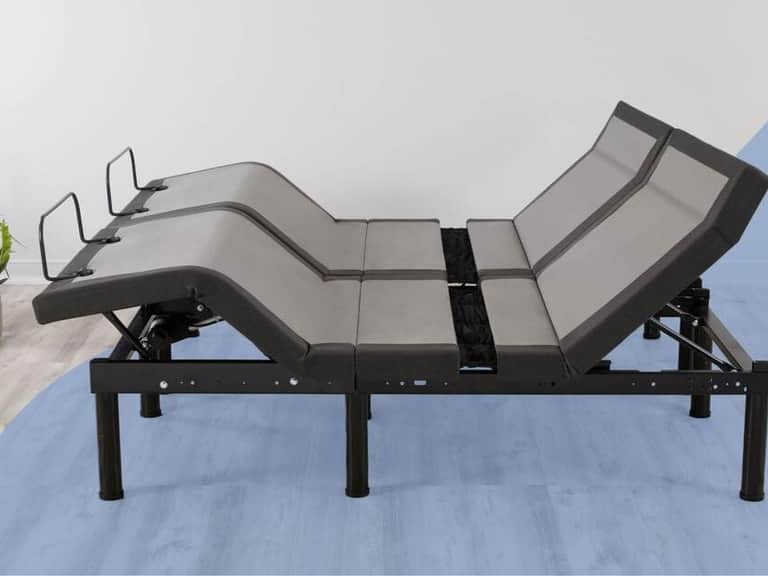
Some adjustable bases are designed to change position while maintaining a particular relationship between the mattress and headboard. Features vary by model, so consult the manufacturer’s instructions for safe operation and compatibility. For example, the Adjustable Max 2023 is an adjustable base with preset positions and wall-aligning technology. Its positioning features do not determine which pillow will suit an individual sleeper; comfort still depends on the person, mattress, and chosen elevation.
Body pillows and side-sleeping support
For some side sleepers, supporting the head is only part of the task. A body pillow can give the arms, torso, or legs somewhere to rest and may help a sleeper maintain a comfortable side-lying posture. It is not a substitute for a well-fitted head pillow, and it will not resolve every source of back or hip discomfort, but its larger shape can help distribute support across more of the body.
An adjustable body pillow can be particularly adaptable because its fill may be altered to suit the sleeper’s preferred firmness and shape. The Savvy Rest Body Pillow is offered in different fill options, including shredded latex, wool, kapok, and a wool-latex blend. Before choosing any body pillow, consider its length, available space, and how it will fit alongside the mattress and bedding. A pillow that is too bulky for the bed may shift or crowd the sleeper.
People using a CPAP device should distinguish comfort from treatment. A pillow may make it easier to position the head or accommodate a mask, but it does not treat sleep apnea. Anyone considering changes to sleep position or equipment should follow advice from their clinician or device provider.
A simple method for fine-tuning loft
If your pillow has removable fill, make adjustments in small increments. Take out a modest amount, keep it in a clean bag in case you want to restore it, and test the pillow for several minutes in the positions you regularly use. Avoid judging it only while seated upright: the head and shoulders rest differently when the body is reclined.
Pay attention to the transition between positions. If a pillow feels right when flat but uncomfortable when elevated, try changing the platform angle before removing more fill. If the pillow slides, examine its placement and the bedding rather than assuming its height is the only issue. If support feels inconsistent, check whether the fill has gathered unevenly and redistribute it according to the care instructions.
Keep a short record for a few nights: the bed position, pillow arrangement, sleep position, and any discomfort on waking. This can reveal patterns that are hard to identify from a single trial. Make changes one at a time, and allow enough time to determine whether an adjustment is helpful. Comfort is subjective, and a dramatic change made in one evening may make it difficult to identify what actually worked.
Common mistakes to avoid
- Choosing by thickness alone: A pillow’s appearance does not reveal how much it compresses under the head.
- Using a steep incline by default: More elevation is not automatically more comfortable. Begin gently and follow any medical guidance you have received.
- Changing several things at once: Altering the pillow, mattress topper, and platform position together makes it difficult to identify the useful change.
- Ignoring movement: Test whether the pillow stays in place as the bed moves, not just whether it feels pleasant when everything is still.
- Expecting a pillow to treat a condition: Pillow selection is a comfort decision, not a replacement for diagnosis or treatment.
Frequently asked questions
Is a special pillow required for an adjustable bed?
Usually, no. Many people can use a pillow they already own. What matters is whether its height, feel, and shape remain comfortable at the positions they use. A pillow with adjustable fill can be useful if its loft needs fine-tuning, but it is not essential for every sleeper.
Should a pillow be higher or lower when the bed is inclined?
There is no universal rule. The appropriate loft depends on body shape, sleeping position, mattress response, and the platform angle. If elevation makes your chin feel pushed toward your chest, the pillow may be too high for that setup—or the bed may be raised more than is comfortable. Test one adjustment at a time.
Can an adjustable-fill pillow help with neck support?
It can provide a way to personalize loft, which may help some people find a more comfortable fit. It cannot guarantee relief from neck pain or correct a medical problem. Persistent or worsening symptoms should be discussed with a qualified health professional.
What kind of pillow works for side sleeping on an adjustable platform?
Look for a shape and loft that fill the space between the shoulder and head without tilting the neck uncomfortably. Because mattress firmness and shoulder width affect that space, personal testing is more useful than relying on a single recommended height. A body pillow may provide additional support for the torso or legs, but does not replace head support.
The measure is comfort in the position you use
An adjustable platform creates a range of sleep surfaces, not a single fixed posture. The pillow that suits a flat bed may still work well, or it may need a small adjustment as the head section rises. Start with your sleeping position, pay attention to how the pillow compresses and stays in place, and test changes gradually.
In the end, the best pillow for an adjustable platform is not defined by a particular material or marketing phrase. It is the one that supports your head and neck comfortably in the settings you use, allows you to move naturally, and fits your care and material preferences. A few careful observations can turn an unfamiliar angle into a more considered, personal sleep setup.
This article is for general educational purposes and is not medical advice. Adjustable-bed positions and pillows may affect comfort differently from person to person. Consult a qualified healthcare professional about persistent pain, breathing concerns, or other health symptoms.